

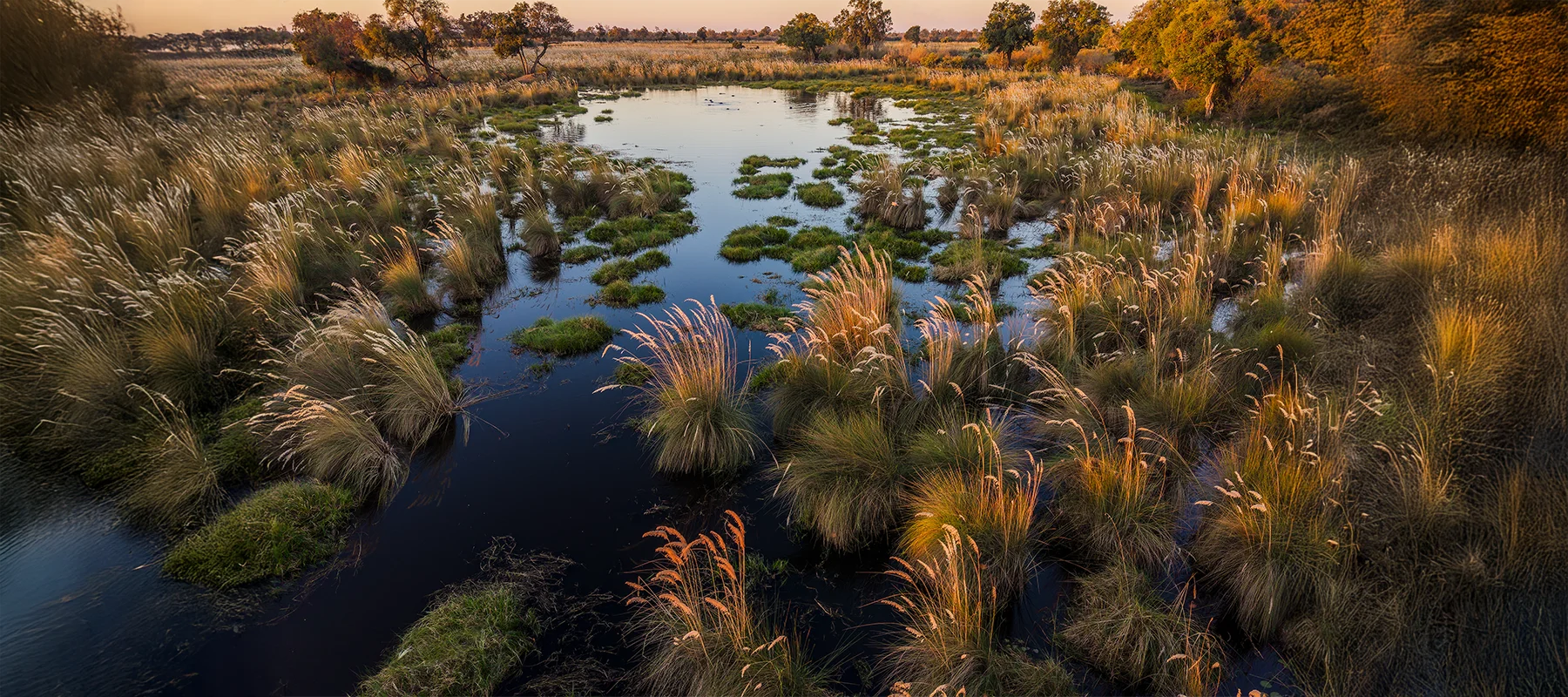
In northern Botswana lies one of the world’s largest, most biodiverse wetlands – the Okavango Delta. While the Okavango Delta is protected as a UNESCO World Heritage Site, the rivers and wetlands that feed it begin hundreds of kilometres away in areas with far fewer protections. If these vital headwaters are degraded by deforestation, unsustainable development or climate pressures, the flow of water that sustains the Delta could be reduced, putting wildlife, local communities and the future of this remarkable ecosystem at risk.
In 2021, De Beers embarked on Okavango Eternal – a ten-year partnership with National Geographic to help address one of the biggest conservation challenges in Africa: preserving the headwaters of the Okavango Delta. Alongside local communities, we are working to protect wildlife and support livelihoods across the region.
The Okavango Delta: a freshwater oasis
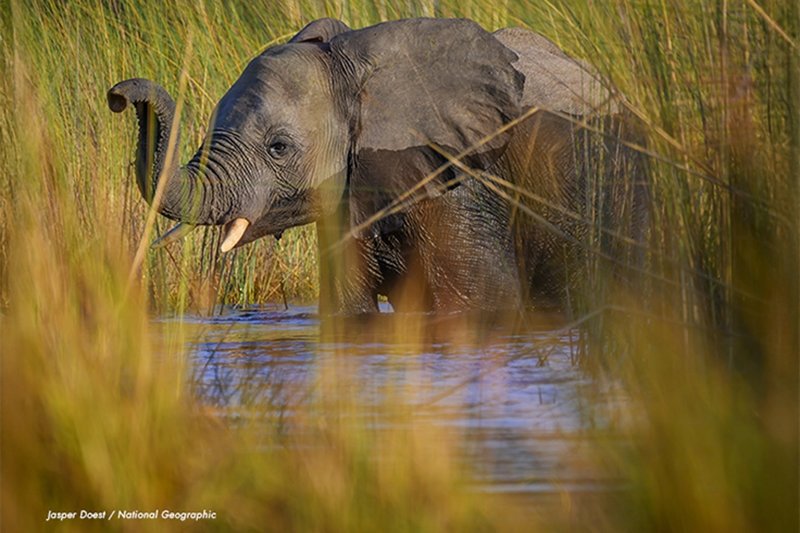
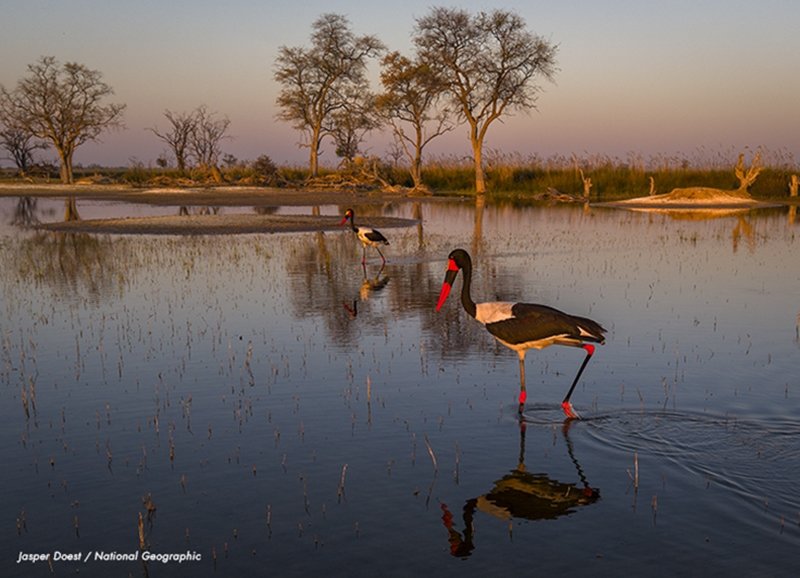
Situated in the middle of the Kalahari Desert in Botswana, the Okavango Delta is one of the most biodiverse areas in Africa – so large it can be seen from space. The area is ecologically significant globally, and is:
- One of the world’s most important strongholds for African elephants
- Home to large mammals and reptiles, including lions, cheetahs, crocodiles, buffalo, wild dogs, and zebra
- A haven for hundreds of species of birds
The Okavango Delta is fed through an annual flood pulse that starts in Angola. This natural event is also a lifeline for the human population – the floods provide the main source of water for around one million people, as well as food and livelihoods. The seasonal floods also support a thriving ecotourism industry, which nourishes the landscape and wildlife that draws visitors – contributing hundreds of millions of dollars to Botswana’s economy.
A complex system of threats
The health of the basin depends on its source lakes and rivers. Their waters originate almost 1,000 kilometres and two political borders away: starting as rain in Angola’s highlands, before travelling through Namibia and into Botswana. If these waters were to stop flowing, one of Africa’s most remarkable natural treasures would stop nourishing the ecosystems that rely on it.
It’s essential that we help secure the protection of these headwaters before it’s too late. Right now, the effects of climate change, water diversion and upstream commercial agriculture are putting these ecosystems risk.
Okavango Eternal – a multi-year, multifaceted, multi-country mission
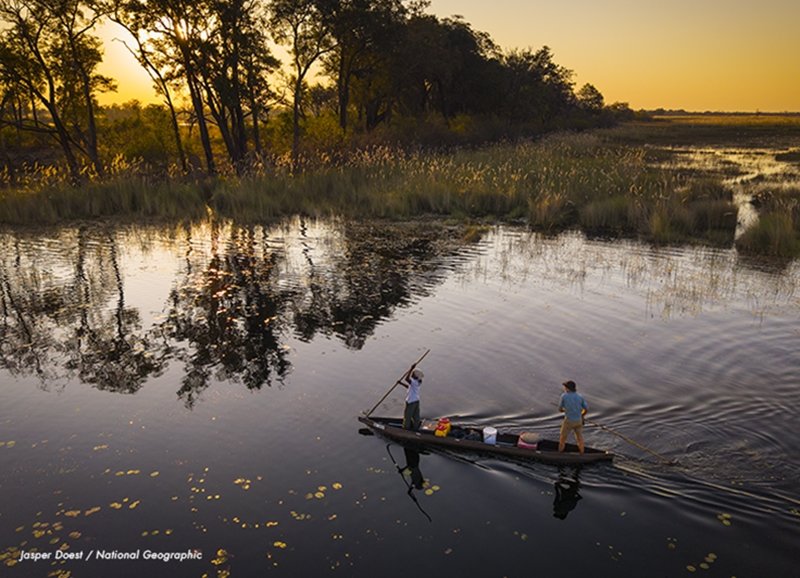
For many years, the National Geographic Okavango Wilderness Project (NGOWP) has been working with local communities, NGOs and governments in southern Africa to help secure protection for the Okavango Basin. Since 2021, De Beers has been providing support, networks and funding to expand and accelerate these efforts, working alongside scientists, government officials, wildlife experts, journalists, photographers, NGOs, partners and National Geographic Explorers.
The overall vision of our Okavango Eternal partnership is for enhanced protection of the headwaters in Angola, to help secure the integrity of the Okavango Delta in Botswana and improve food and water security for over one million people across the Okavango River Basin. The initiative has two key objectives, aligned to our Building Forever approach; protecting nature and supporting livelihoods. It is a ten-year, multifaceted, and multi-country mission.
Okavango Eternal – Protecting a Natural Wonder
Our progress so far
Protecting the Okavango Delta begins with protecting the headwaters that feed it. To help secure their long-term future, Okavango Eternal’s first priority has been to bring people together, convening stakeholders, supporting community engagement and building partnerships with local institutions to create a shared and lasting vision for conservation.
The partnership has also established critical scientific infrastructure, including the installation of hydrological monitoring stations across remote river systems, helping to strengthen our understanding of water flows throughout the Basin. In parallel, Okavango Eternal continues to support the National Geographic Okavango Wilderness Project’s annual Delta crossings, generating valuable long-term data on ecosystem health and water quality.
Through a combination of cutting-edge research and traditional knowledge, Okavango Eternal is deepening understanding of how the Basin’s ecosystems are connected. This work includes mapping wildlife migration routes, identifying key habitats and documenting more than 70 species new to science. Together, these insights are helping build momentum for the protection of transboundary wildlife corridors, enabling animals to move freely across landscapes and thrive.
Angola’s landmark 2026 decision to designate Lisima Lya Mwono, locally known as the “Source of Life”, as the country’s first-ever Ramsar Wetland of International Importance marked a defining moment for the partnership. By protecting the headwaters that feed the Okavango Delta, this historic designation helps secure the future of one of the world’s most extraordinary freshwater ecosystems, alongside the communities, livelihoods and opportunities that depend on its waters. The achievement builds on more than a decade of pioneering exploration, scientific research and conservation work by the National Geographic Okavango Wilderness Project, supported by De Beers through Okavango Eternal.
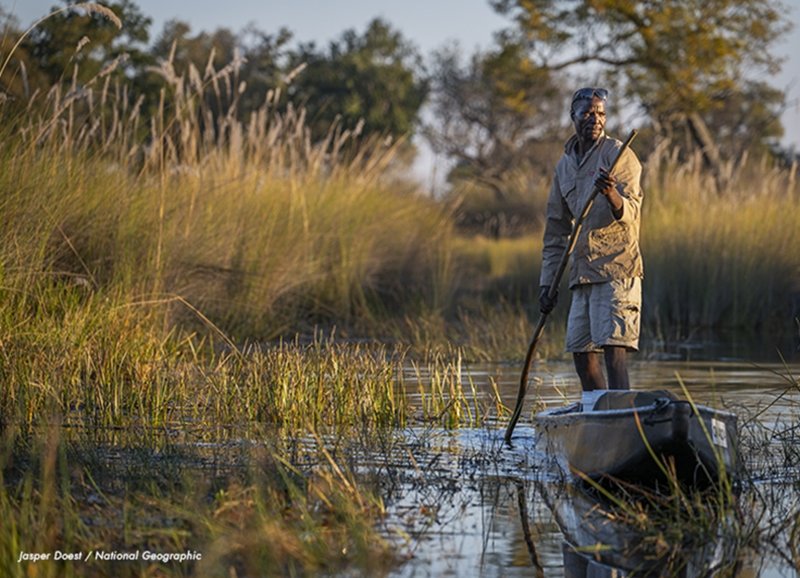
Between 2021 and 2026, Okavango Eternal supported more than 2,000 conservation-linked livelihood opportunities across Angola, Namibia and Botswana, including beekeeping, basket weaving, regenerative agriculture and entrepreneurship training. The partnership has also helped improve infrastructure benefiting more than 18,500 people in Angola, through initiatives such as building bridges, constructing community meeting centres and refurbishing schools and clinics, helping to create stronger foundations for community-led conservation.
“Protecting these headwaters and wetlands, miombo woodland forests – the natural heritage of Angola – is one of the most critical conservation challenges in Africa today.”
National Geographic Explorer, NGOWP Project Lead
Looking ahead
Building on our shared foundation and the work delivered to date, National Geographic and De Beers will pursue three interconnected goals between 2026 - 2031:
- Advancing conservation through science and traditional knowledge, while inspiring new career pathways, and informing policy and conservation dialogue.
- Expanding livelihood opportunities that enable people to lead and benefit from conservation, with practical support including financial and business training, mentoring and connections to ethical markets
- Leveraging storytelling to inspire conservation action, through the globally renowned National Geographic brand, and by investing in youth-led local storytelling initiatives.
Diamonds and the Delta
In a story hundreds of millions of years in the making, diamonds and the Okavango Delta were both formed through geological time and tectonic power. Born through this shared history, natural diamonds are now helping to protect the Okavango ecosystem for generations to come, watch this video to discover more.
All photography featured on this page can be credited to Jasper Doest / National Geographic